This is a periodic newsletter from OpenWater Energy Ltd where we discuss and and analyse key developments related to the Offshore Energy Transition. We trust that you find this interesting, and any feedback is welcome – please send to info@openwaterenergy.com
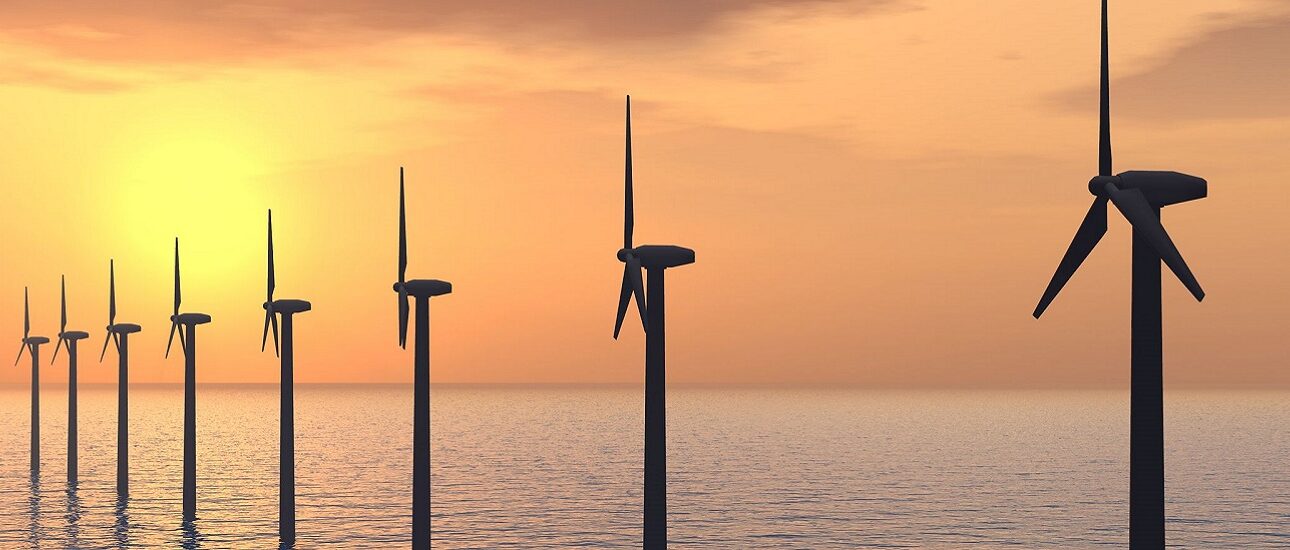
Floating Offshore Wind (FOW) achieved a significant milestone in 2018 with the start-up of the first floating wind farm; Equinor’s Hywind offshore Scotland. This farm has apparently performed very well, exceeding the expected wind factor levels. Two demonstrators were also commissioned in 2018 – PPI’s Kincardine Windfloater and Ideol’s SemRev demonstrator.
Looking ahead to 2019, the WindFloat Atlantic project should come into operation in Portugal, marking a major achievement for PPI. Three more demonstrators should also come on stream; Ideol’s Floatgen demo in Japan, Steindal’s Tetraspar demonstrator and a small device in Ulsan, South Korea.
More importantly, at least 10 major projects are pushing for FID in 2019, with farm capacities from 25MW (four pilot projects in France), up to 500 MW (in Taiwan and Japan). An interesting development would be Equinor’s proposed farm to power Snorre and Gullfaks offshore oil & gas platforms, in order to reduce CO2 emissions from oil and gas production. We will watch with interest to see if this project makes FID.
These FOW projects will enable a better view on the long-term cost reduction potential through standardisation, and more confidence as to whether the target cost of Eur 50/MWh can eventually be achievable for floating wind power.
Wave Energy
Wave energy progressed slowly in 2018. At year end there are around 27 wave energy units operational offshore worldwide, but many are small and the total installed capacity is only around 2 MW. However, momentum is building slowly, and another 18 units are currently under construction with a total capacity of around 7 MW.
The market is still very immature, with no dominant player yet emerging. Wello Oy is one of the most advanced, with their Penguin rotating mass devices, but these remain at pilot scale testing. Carnegie Clean Energy are also well advanced in pilot testing of their CETO units, but are rumoured to be in financial trouble. And finally, OceanEnergy is progressing with fabrication of their 500kW demonstrator for the US Navy in Hawaii using the Siemens HydroAir turbine.
Like for Tidal Energy below, there remains an ongoing challenge to find ways to make wave power competitive against ever cheaper energy from wind and solar, when the technology and the standardisation process are still rather immature.
Tidal Energy
In 2018 Tidal energy made good progress, especially in the UK. At the end of 2018 there are around 20 tidal turbine units operational offshore, with an installed capacity of around 17 MW.
Atlantis Resources (now SIMEC Atlantis Energy) progressed their Pentland Firth MeyGen project, with good performance from the initial 6MW array, and funding obtained for Phase 1b. They also scored a potentially massive win in France, where a JV has been signed with the French Government for a tidal project in Normandy for up to 2GW of power, with the aim to demonstrate that an LCOE of Eur 150/MWh can be achieved. Minesto is progressing with installation of the first subsea kites for their DeepGen Holyhead project, which could deliver up to 10 MW.
One important milestone was the world’s first integrated tidal array with battery storage, giving a baseload supply to the grid. This was installed by Nova Innovation at Bluemull Sound in Shetland Isles, UK, and although of modest capacity, it is clearly a trendsetter.
2018 also saw the unfortunate demise OpenHydro, a pioneer in tidal energy. The parent company DCNS (who acquired 60% of OpenHydro in 2013) decided to cease all tidal work, and placed the company in administration, ironically just days after one of their units was installed in Canada. OpenHydro joins a long list of tidal energy failures, which includes Voith, Bluewater and Alstom. For the few players left, there remains an ongoing struggle to fund projects and to find ways to make tidal competitive against ever cheaper wind and solar energy. Some have resorted to crowdfunding (Orbital) and others have required government bail-outs (Tocardo). Atlantis may be best placed, be even for them the short term future is likely to rely on continue grants and subsidies. Standardisation of tidal turbines could be easier to achieve than wave energy convertors, and so standardisation benefits could be easier to achieve, but this remains to be seen.
Tidal turbines face an inherent problem that to reduce cost, they should move to larger tidal turbines, but this is fundamentally constrained by water depth limitations. Moreover, larger turbines Hence, achieving a long term LCOE which is competitive against wind and solar looks very challenging, and tidal may remain a niche opportunity.