Introduction
The FPSO industry is constantly evolving to meet market needs as new oil & gas provinces are discovered and new technologies deployed. This newsletter discusses three important long-term trends which are shaping the industry, along with some of their implications.
The Growth in Topsides Weight
FPSO topside weights have steadily grown over the last 50 years, as FPSOs have become larger and more complex. From the 1990s to 2020, the mean topside dry weight increased from around 3,000 to 14,000 MT. However, the rapid increase in mega-FPSOs for Brazil and Guyana this decade has driven up the mean size to around 24,000 MT. Maximum topside dry weight has followed the same trend with a rapid increase this decade to peak at 50,000 MT today.
The reasons driving this increase in topsides weight include the following.
a) Larger processing capacities for the mega-FPSOs in West Africa, Brazil and Guyana to capture economies of scale.
b) Complex gas processing requirements for the high CO2 pre-salt fields in Brazil.
c) ESG pressure to reduce emissions, leading to heavier equipment such as combined cycle gas turbines for power generation.
This weight increase has several implications.
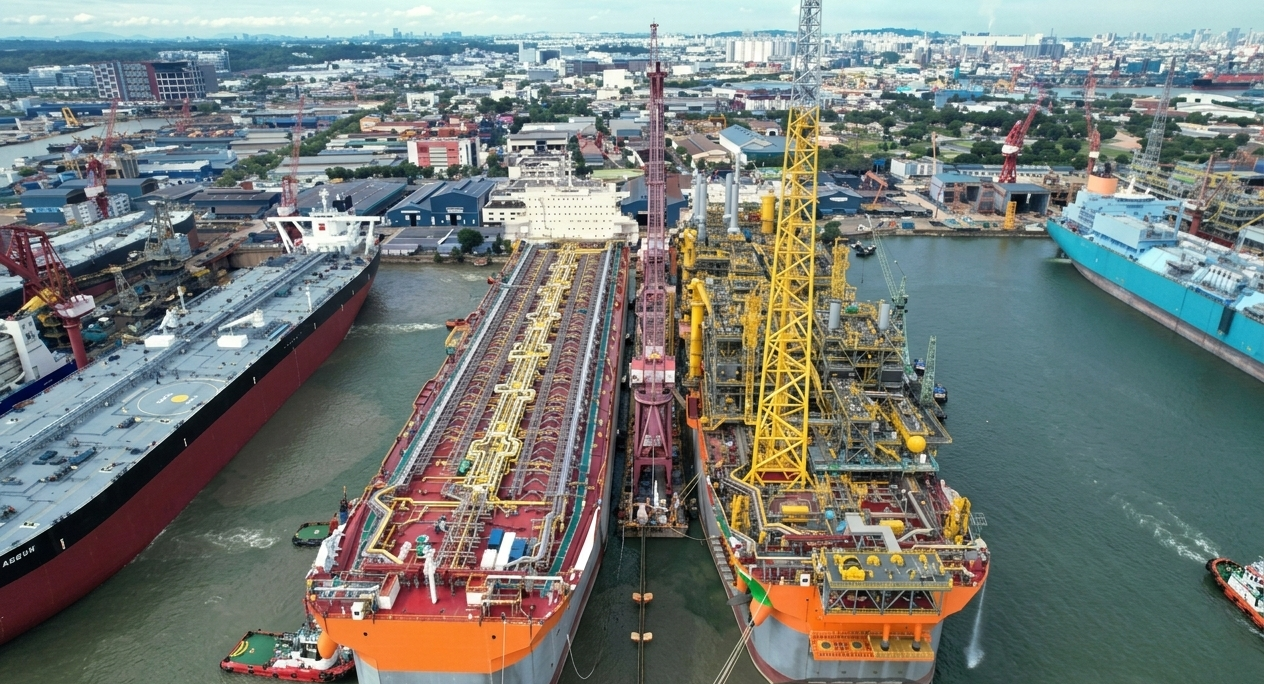
Firstly, larger and heavier modules impose higher loads on the FPSO deck, making converted hulls more difficult to use. Beyond 25,000 to 30,000 MT of topside on a VLCC, it may be more economical to switch to a new build hull than to reinforce a converted hull. The heavier topside modules may also constrain the choice of module fabrication yards for load-out capacity, and module integration yards for the availability of suitable quaysides and heavy lift cranes.
Secondly, larger topsides can require bigger FPSO hulls with more deck space to accommodate the modules and extra deadweight capacity. These factors can control the required hull size, rather than the oil storage volume needed.
Thirdly, higher POB levels are required to safely operate and maintain larger and more complex topsides. Although the latest digital and robotics technology can reduce the permanent crew, the offshore commissioning team and vendors for planned shutdown overhauls still require offshore bed space. We have seen the typical POB capacity increase from 80 some years ago to around 160 today.
And finally, typical project schedules have increased due to the longer period needed to integrate large topsides modules, and then pre-commission and commission them. Typical durations from module lifting to FPSO sail away have increased from 3 to 4 months in the past to around 9 months today.
Download the full newsletter here: Q1 2023 OWEL Newsletter.pdf